10 must-know tips to pass your camp kitchen health inspection
Inspections go well when the kitchen was already running properly. Ten practices that make an unannounced visit an ordinary day.
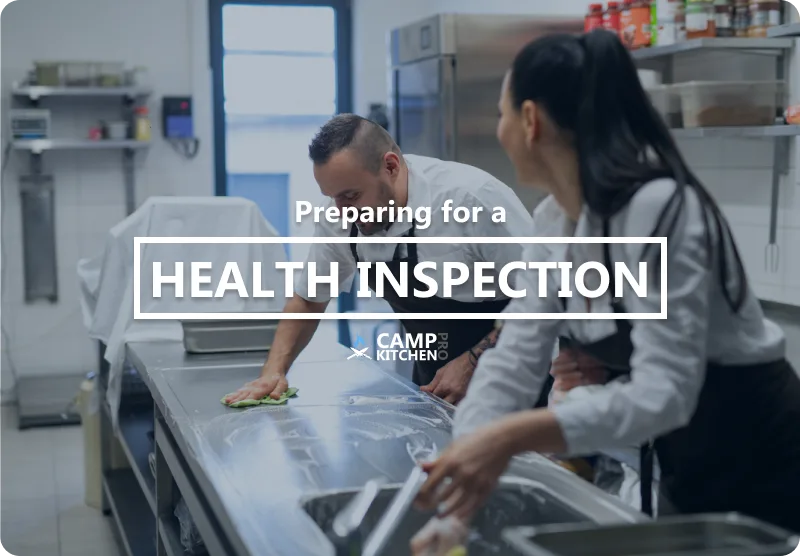
Nobody passes an inspection by preparing for it the night before. Inspections reward kitchens that already had the habits, the logs, and the temperatures right, which means the work happens across the season, not the week the inspector is due.
1. Treat training as ongoing
Food safety fundamentals need reinforcing well past orientation. Keep handwashing, glove use, and sanitation reference material posted where the work actually happens.
2. Label everything
Every stored item should carry what it is, when it was opened, and when it expires. Beyond preventing mistakes, complete labelling is one of the fastest signals to an inspector that the kitchen is managed properly.
3. Hold your temperatures
Cold holding at 41°F or below, hot holding at 135°F or above. Log it consistently: the log is the evidence, and a gap in it is worse than a single reading being off.
4. Clean continuously
Daily, weekly, and monthly schedules, with the monthly one covering the places that get forgotten: behind equipment, hood systems, under fixed benches.
5. Prevent pests
Sealed storage and prompt spill cleanup do most of the work. Keep professional pest control on a schedule and keep the documentation.
6. Keep handwashing stations functional
Soap, paper towels, a bin, and signage, at every station, not just the main one. A station missing any of those is effectively out of service.
7. Check equipment daily
Refrigeration, dishwasher temperatures, holding units. When something needs repair, document the fault and the fix.
8. Run mock inspections
Walk the kitchen as though you were the inspector, before they arrive. You will find things you have stopped noticing.
9. Keep records in one place
Temperature logs, pest control reports, certifications, cleaning schedules. Being able to produce them immediately changes the tone of the whole visit.
10. Build a safety culture
The nine points above hold up when the team believes in them rather than performs them. A kitchen where safety is habit passes inspections as a side effect of ordinary operation.
If you want a second opinion on where your logs and routines currently stand, contact us and we will talk it through.