Simplifying dietary and allergy information: what the kitchen really needs
Long intake forms bury the information that keeps campers safe. The two things a camp kitchen actually needs, and what belongs somewhere else.
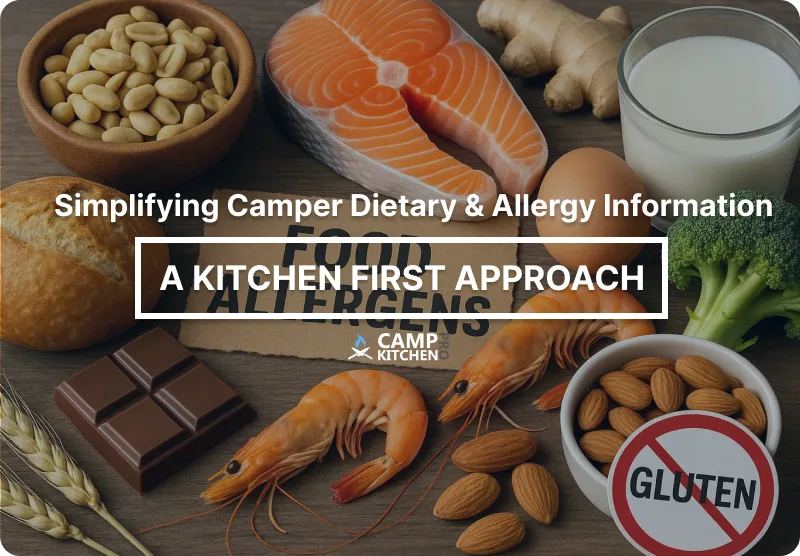
Most camps collect dietary information with the best intentions and end up with a form that works against them. Preferences, dislikes, and medical needs all arrive in the same list, and the kitchen has to sort the critical from the merely nice-to-know while service is starting.
The safest form is the shortest one that still captures what matters.
Why simple works better
When everything is on the form, nothing stands out. An anaphylactic peanut allergy and a dislike of mushrooms occupy the same visual weight, and the person reading it at 6 a.m. has to make that distinction themselves, every time.
Cutting the form down does four things at once: it makes the safety-critical information impossible to miss, it removes ambiguity for staff, it speeds up planning, and it tells families you take the serious entries seriously.
The two things the kitchen needs
Food allergies. Which allergen, how severe (moderate versus anaphylactic), and whether the camper carries medication. Severity changes how the kitchen handles preparation, not just what goes on the plate.
Dietary restrictions. Vegetarian, vegan, kosher, halal. These are commitments rather than preferences, and they need planning ahead of service rather than a substitution at the counter.
That is genuinely the whole list. FARE is the reference worth pointing families to if they want detail on severity and management.
What the kitchen does not need
Preferences. A camper who does not like tomatoes is a real thing to know, but it is a conversation for their counsellor, not a line on the kitchen’s allergen sheet.
Mixing the two is what makes the sheet long enough to stop being read carefully. Separating them costs nothing and gives the critical entries room to be visible.
The last bite
A shorter intake form is not less thorough. It is a decision about which information has to reach the kitchen and which belongs elsewhere, and making that decision on paper, once, is better than asking a tired cook to make it every service.
The other half is where that information lands. When allergens sit on the ingredient, every menu built from it inherits the flag automatically.