5 ground rules every camp kitchen team should agree on
Camp kitchens run hot and fast. Five agreements, made before the season starts, that keep a team working well when it does.
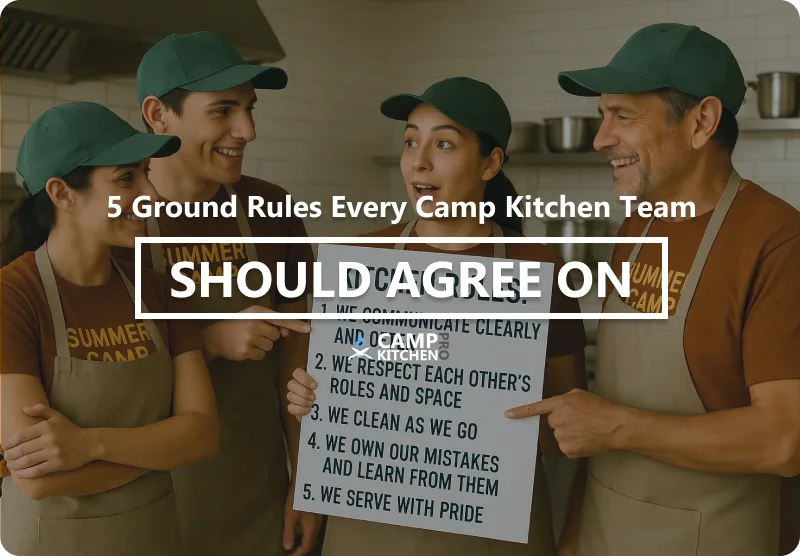
A camp kitchen is a high-pressure room. Volume is large, timing is fixed, and the team is often meeting each other for the first time in June.
The kitchens that run well tend to have agreed on a few things in advance. Not a policy document: five understandings everyone actually shares.
1. Communicate clearly and often
Most kitchen mistakes trace back to something that was assumed rather than said: an allergy, a recipe change, someone running behind on a station.
In practice that means briefing before every shift, calling out safety hazards loudly, and making it always better to ask than to guess. Escoffier’s guide to effective communication in a professional kitchen covers the habits worth borrowing.
2. Respect roles and space
Everyone has a station and a set of responsibilities. During a rush, that structure is the only thing holding service together.
It means solving the problem in front of you rather than assigning blame, and backing the person running the pass even when you would have called it differently.
3. Clean as you go
Cleaning continuously is a safety measure before it is a tidiness one. Wet floors and cluttered surfaces are where accidents happen.
Wipe surfaces as you finish with them, wash tools promptly, and treat shared space as everyone’s responsibility. The end of the shift stops being something to dread.
4. Own mistakes and move on
People hide errors when they expect to be punished for them, and a hidden error in a kitchen can become an allergen incident.
A team that can say “I got that wrong” early fixes problems while they are still small. That takes trust, and trust is built by how the first mistake is handled.
5. Take pride in the service
For a lot of campers, meals are the most reliably good part of the day. That is worth something.
It shows up in presentation, in serving on time, and in recognising that a well-run dining hall changes how a camp feels.
None of these are complicated. Agreeing on them out loud, before the first service, is what makes them real, and they land better with a team you hired well, which starts with avoiding the common kitchen hiring mistakes.