Kitchen efficiency: what every camp director should know
Efficiency in a camp kitchen is a design problem, not a cost-cutting exercise. Where the real friction lives, and what directors can do about it.
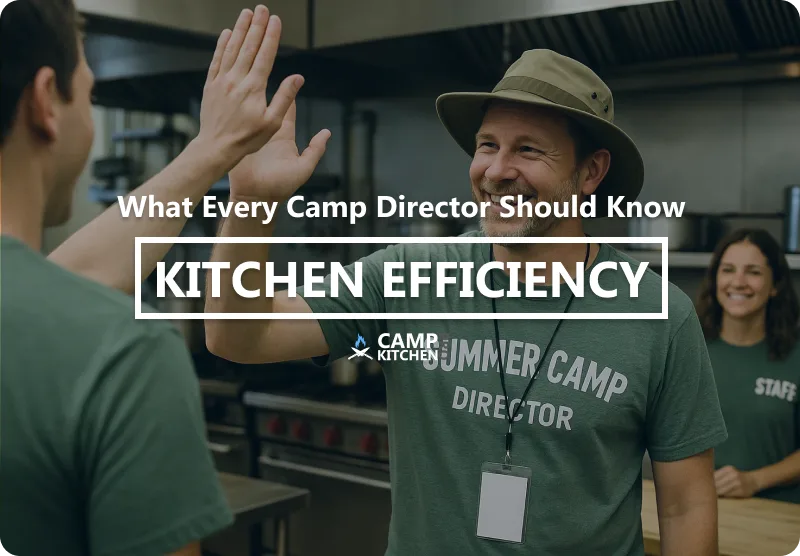
Most camp directors are not chefs, and most do not need to be. But the kitchen is one of the few operations on site that runs three times a day, every day, with a team that turns over every summer, and that makes it worth understanding.
Efficiency here is not about doing less. It is about removing the friction that makes a competent team look slow.
Efficiency starts with workflow
Watch how food actually moves: storage, prep, cooking, service, cleanup. Look for the points where people collide, where someone crosses the room twice for one item, where a queue forms behind a single station.
Those bottlenecks are usually physical, and usually fixable without spending anything.
Menus drive everything downstream
A menu is a staffing decision, an equipment decision, and a prep decision all at once. Complicated recipes and one-off ingredients slow a kitchen down more than any other single factor.
Menus built from repeated components (the same base prepared different ways across the week) spread labour evenly and reduce the number of things that can go wrong. This is the case for treating camp menu planning as an operational decision rather than a catering one.
Standardisation is your friend
When every cook does a dish their own way, quality swings, portions drift, and training a new hire takes twice as long.
Written recipes and defined portions mean anyone on the team can step into a station. That is not bureaucracy. It is what lets people take a day off.
The right tools save hours
Broken or missing equipment quietly costs a kitchen a great deal of time. Audit the essentials before the season, not during it. Even small equipment upgrades (a working immersion blender instead of three trips to a food processor) remove a daily source of chaos.
Communication is a core ingredient
A short briefing before each service, covering what is on the menu, who has which dietary requirement, and who is covering which station, prevents most of the mistakes that would otherwise surface mid-service.
Make it easy for staff to raise problems too. They will see them first.
Efficiency is not cutting corners
Framed as cost-cutting, none of this lands with a kitchen team. Framed as removing the things that make the day exhausting, it does, and that is the more accurate description anyway.
You do not need to be a chef to lead well
Ask your kitchen leadership two questions: what slows you down, and what would help. Then act on at least one answer. That alone puts you ahead of most operations.